
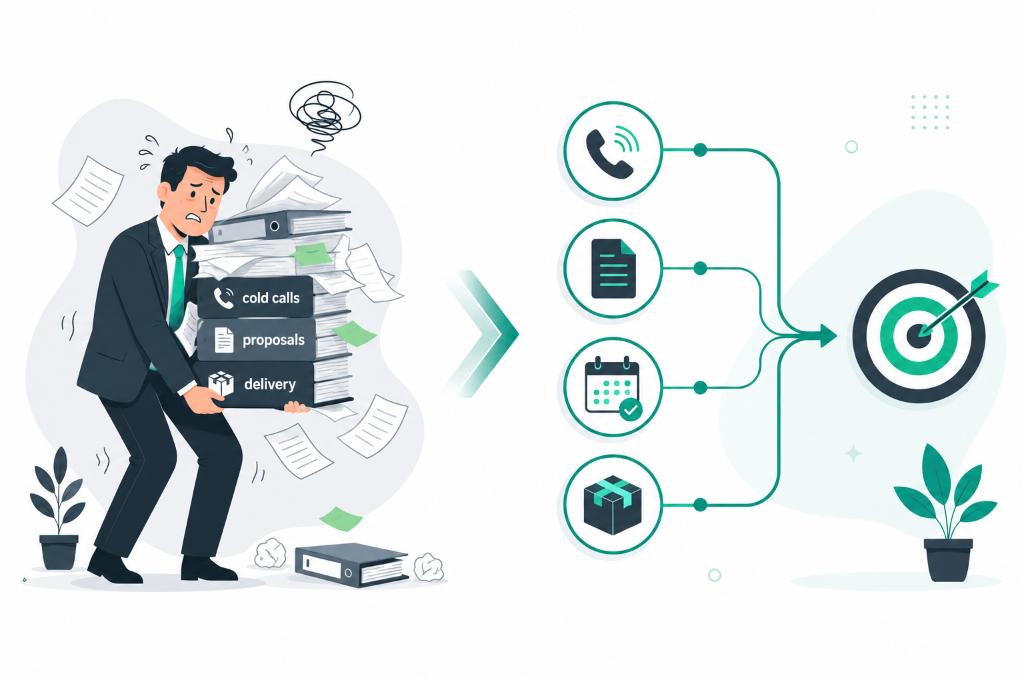
Burnout in a sales team is one of the most common issues confronting modern organizations. Because sales is a direct revenue-generating function, it carries inherent pressure. However, in many high-pressure workplaces, this pressure is magnified by a fundamental operational flaw: expecting a single salesperson to do everything.
A typical sales professional today is tasked with an incredibly lengthy process. They must handle cold calling, generate inquiries, prepare proposals, submit them to customers, conduct follow-ups, lead negotiations, close the order, hand it over to production, follow up on production status, and coordinate final delivery.
Expecting one person to show extraordinary skills at every single stage of this complex pipeline is unrealistic. It leads directly to exhaustion, high turnover, and lost revenue.
If you are a business owner or manager wondering how to prevent employee burnout in your commercial operations, the answer does not lie in office perks or wellness apps. It lies in process design, delegation, and structured execution.
The Danger of the "End-Result Only" Mindset
Many corporate leaders make the mistake of focusing exclusively on the end result—the monthly sales numbers—while completely ignoring the daily process. They treat sales as a black box and pressure their teams to "just close more deals."
When sales numbers fall, the response is to demand more activity: more calls, more meetings, and more multitasking. But without a structured system, this pressure only accelerates employee exhaustion.
To protect your team, you must transition to a process-driven sales system. When you build a clear structure for each stage of the pipeline—inquiry generation, proposal creation, and order follow-up—responsibility becomes manageable, and results become predictable.
1. Break the Workflow into Specialized Pieces
When I served in senior leadership roles, my primary strategy for handling workload stress was simple: I broke complex processes into smaller pieces and distributed them among specialized subordinates.
Instead of forcing a single salesperson to find a lead, write a technical proposal, negotiate the contract, and track the delivery truck, you should build a structure where:
- Lead Gen Specialists focus solely on cold outreach and inquiry generation.
- Account Managers focus on customer relationships and negotiations.
- Operations Assistants handle proposal documentation and production tracking.
By dividing the workflow, individuals can focus on what they do best rather than getting overwhelmed by administrative tasks.
2. Protect Juniors from the Multitasking Trap
One of the quickest ways to trigger employee burnout is forcing junior team members to multitask before they have mastered the basics. Multitasking is a major driver of cognitive overload and mistakes.
In my teams, I made it a strict rule to never pressure juniors with multiple simultaneous responsibilities during their initial stages. Instead, they were assigned to a single, specific task (such as database building or initial inquiry handling). Only after they demonstrated confidence and consistent execution in that role were they gradually introduced to the next stage of the sales cycle.
3. Leverage Planners to Define the Day
Anxiety in sales often comes from lack of clarity. When an employee sits at their desk in the morning with a mountain of unorganized tasks, they don't know where to start, leading to decision fatigue.
To combat this, every professional on your team should utilize structured planning tools:
- The Weekly Planner: Establishes major targets, key customer meetings, and critical proposal deadlines.
- The Daily Planner: Breaks the week down into clear, hour-by-hour activities (e.g., 9:00 AM to 11:00 AM: Cold calling; 2:00 PM to 4:00 PM: Proposal prep).
When your team members are aware of exactly what they need to do next, the psychological stress of the "unknown" is eliminated.
Final Thoughts
According to workplace dynamics reports published by the Gallup Workplace Index, unmanageable workloads and lack of role clarity are the top contributors to employee turnover.
Wellness programs cannot fix bad systems. If you want to protect your sales team from getting exhausted, you must trust the process, build clear SOPs, break down heavy tasks, and guide your team with structured planners.
Start today by mapping your sales pipeline. Find the biggest bottleneck where your team is wasting time, split the responsibility, and give your salespeople the focus they need to succeed.